Korean (EPS-TOPIK)
EPS-TOPIK exam format: a guide for Nepali candidates
How the computer-based EPS-TOPIK test is laid out, what the reading and listening questions look like, and how to practise for it.
UBTApp team, , 6 min read
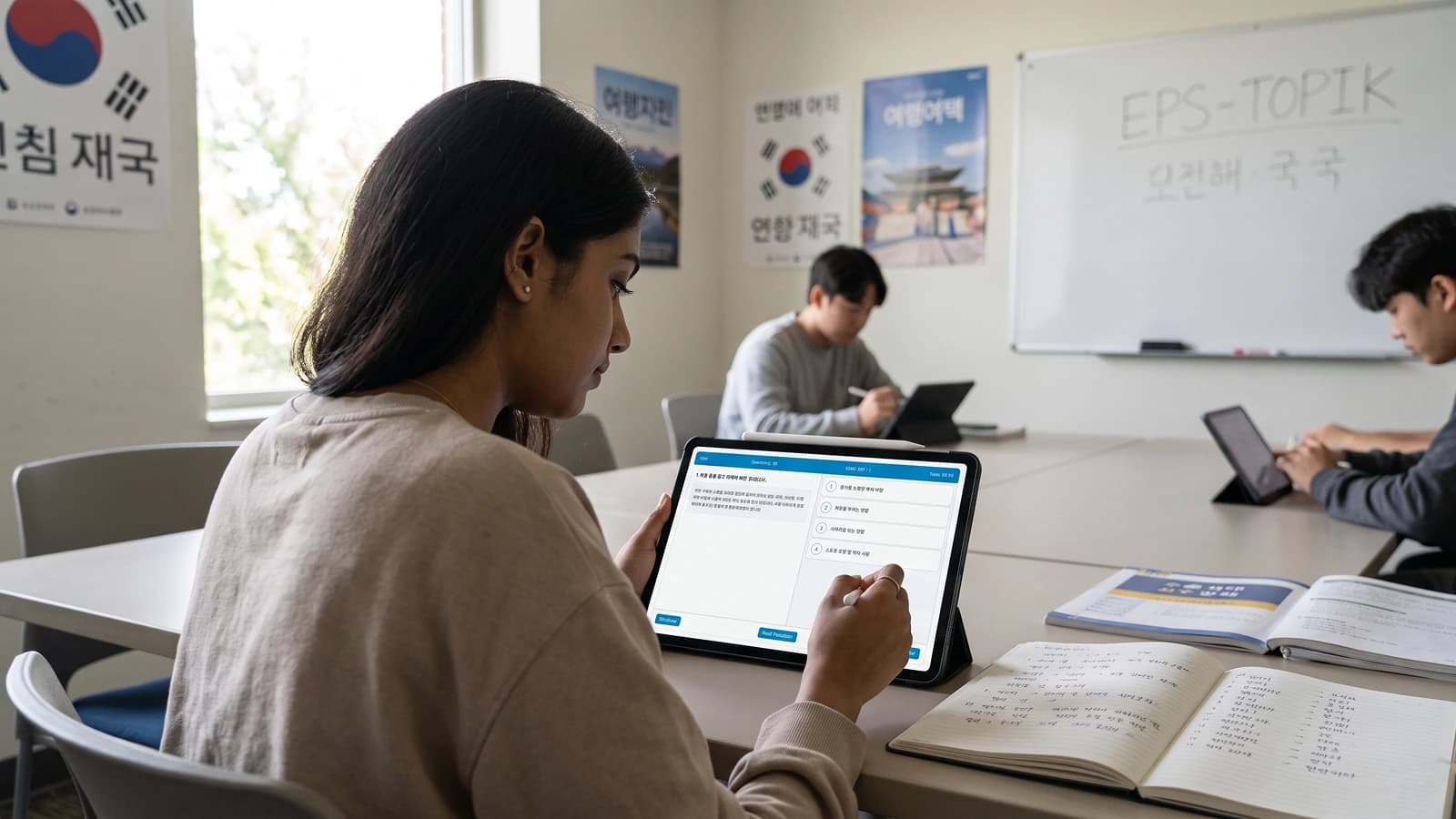
The Employment Permit System (EPS) is how Korean companies in sectors such as manufacturing, construction, agriculture and fisheries hire workers from partner countries, including Nepal. Before a candidate can be considered, they sit the EPS-TOPIK, a Korean language test run by HRD Korea.
Most Nepali candidates now meet it as a computer-based test, which is why institutes and students talk about UBT and CBT practice. This guide covers the layout of the test and the habits that make the biggest difference in preparation.
How the test is laid out
The computer-based EPS-TOPIK has two parts:
- Reading (읽기): 20 questions
- Listening (듣기): 20 questions
That makes 40 questions, worth 200 points in total. The time limit, the pass mark and the exact rules can change between rounds, so always read the official notice for the round you are applying to.
What the reading questions test
Reading questions start simple and get longer. Expect to:
- recognise everyday words, often next to a picture
- read signs and notices, especially workplace safety signs
- choose the word that fits a blank in a sentence
- answer questions about short texts such as messages, notices and timetables
Workplace words come up again and again: 안전모 (safety helmet), 공사장 (construction site), 작업장 (workplace), 조심하다 (to be careful). Learning these in groups saves time.
What the listening questions test
In the listening part you hear a word, a sentence or a short conversation and pick the matching picture or answer. Each recording is short, and you usually hear it only once, so the skill being tested is quick recognition rather than slow translation.
How to prepare
- Practise on a computer, with a timer. The interface and the clock are part of the test. Doing full timed mock tests removes the surprise on exam day.
- Listen every day. Ten minutes of listening questions daily beats one long session a week.
- Review every wrong answer. A mock test is only useful if you go back through the questions you missed and learn why.
- Group your vocabulary. Learn workplace, safety, daily life and number words as sets.
- Track your scores. Write down your reading and listening results separately, so you can see which part needs more work.
Practising with UBTApp
Institutes on UBTApp run timed EPS-TOPIK, UBT and CBT mock tests with real listening audio, and students see their score and every answer as soon as they finish. You can try a short sample test on our homepage, or download the student app.